How to Start a Podcast in 2026: Complete Beginner’s Guide
Introduction
Want to know how to start a podcast in 2026? You’re in the right place. Podcasting has exploded into a $25 billion industry, with over 5 million podcasts and 150 million episodes available today. The best part? Starting a podcast has never been easier—or more affordable.
Whether you want to share your expertise, build a personal brand, generate passive income, or simply connect with like-minded people, this comprehensive guide will walk you through every step of starting a successful podcast. We’ll cover equipment, software, hosting platforms, content strategy, and proven growth tactics that work in 2026.
By the end of this guide, you’ll have everything you need to launch your podcast with confidence. Let’s dive in.
Why Start a Podcast in 2026?
The Podcasting Boom Continues
The numbers tell an incredible story:
- 464 million people worldwide listen to podcasts monthly
- Americans alone spend an average of 8 hours per week listening to podcasts
- 73% of listeners have purchased a product after hearing it on a podcast
- Podcast advertising revenue is projected to reach $2.5 billion in 2026
Benefits of Starting a Podcast
Build Authority: Position yourself as an expert in your niche. Every episode demonstrates your knowledge and builds credibility.
Grow Your Audience: Podcast listeners are highly engaged. They spend hours with your content, creating deeper connections than blog readers or social media followers.
Generate Income: Monetize through sponsorships, affiliate marketing, premium content, courses, coaching, or product sales.
Network with Influencers: Interview-based podcasts open doors to industry leaders you’d never reach otherwise.
Repurpose Content: One podcast episode becomes blog posts, social media clips, YouTube videos, newsletters, and more.
Flexible and Scalable: Record from anywhere, on your schedule. Start solo, add co-hosts, or scale to a full production team.
Step 1: Define Your Podcast Concept
Choose Your Niche
The biggest mistake new podcasters make is being too broad. “Business” is too vague. “Marketing for E-commerce Startups” is specific and actionable.
How to Find Your Niche:
- What are you expert in? Your profession, hobby, or unique experience
- What problems can you solve? Identify pain points your audience faces
- What’s underserved? Search Apple Podcasts and Spotify for gaps
- Can you commit long-term? Choose something you won’t burn out on
Profitable Podcast Niches in 2026:
- Personal finance and investing
- Health, wellness, and fitness
- Business and entrepreneurship
- Technology and AI
- True crime and mystery
- Self-improvement and productivity
- Comedy and entertainment
- Educational (history, science, culture)
Decide on Your Format
Solo Podcast: You alone, sharing expertise or storytelling. Lowest production complexity, highest consistency.
Co-Hosted: Two or more regular hosts. More dynamic, requires scheduling coordination.
Interview-Based: Guest-focused episodes. Great for networking, requires guest booking and prep.
Hybrid: Mix of solo, co-hosted, and interview episodes. Most flexible, most complex.
Narrative/Storytelling: Highly produced, story-driven content. Highest production value, most time-intensive.
Name Your Podcast
Your podcast name is your first impression. Make it count.
Name Criteria:
- Clear and descriptive (listeners should know what it’s about)
- Easy to spell and remember
- Unique (search Apple Podcasts and Spotify to avoid duplicates)
- SEO-friendly (include keywords when natural)
- Scalable (don’t box yourself into a topic you might outgrow)
Good Examples: The Daily, How I Built This, The Tim Ferriss Show, Crime Junkie, Smart Passive Income
Bad Examples: “My Thoughts” (too vague), “The John Smith Show Episode 47” (too long), “Biz Marketing Tips 2026” (dated)
Step 2: Get the Right Equipment
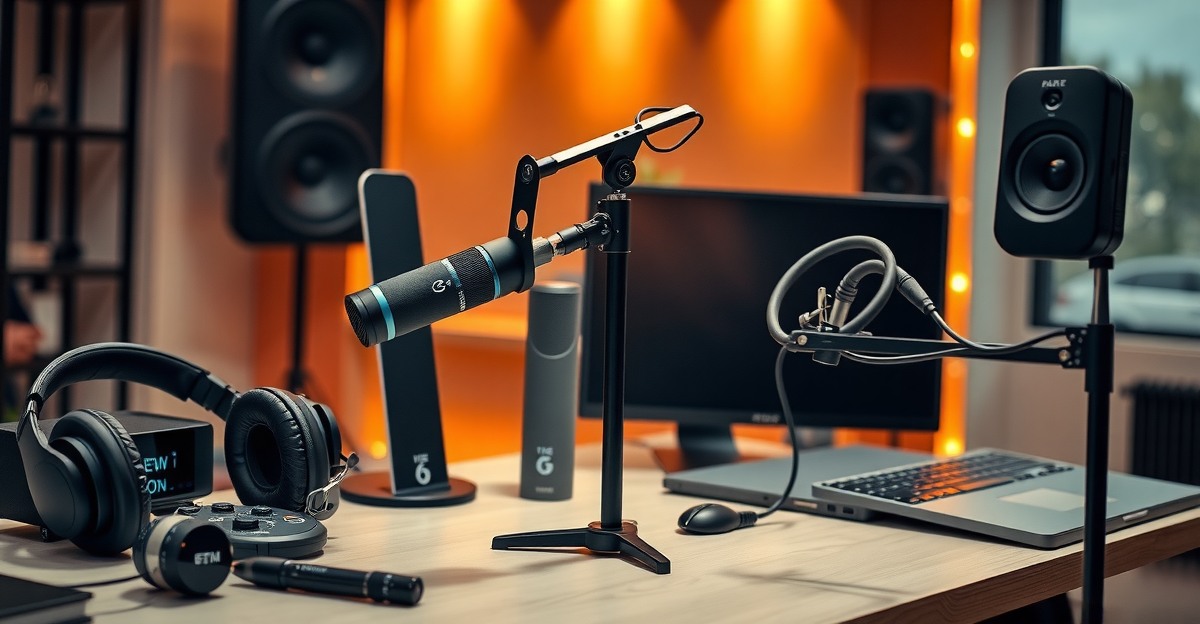
Essential Podcast Equipment for Beginners
You don’t need thousands of dollars to start. Here’s what actually matters:
1. Microphone ($50-400)
Budget Pick: Samson Q2U ($70) – USB/XLR hybrid, excellent sound quality
Mid-Range: Audio-Technica ATR2100x-USB ($169) – Versatile, great for beginners
Professional: Shure SM7B ($399) – Industry standard, requires audio interface
USB vs. XLR: USB mics plug directly into your computer (simpler). XLR mics require an audio interface but offer better quality and flexibility.
2. Headphones ($30-150)
Closed-back headphones prevent audio bleed during recording.
Budget: Sony MDR-7506 ($100) – Studio standard
Budget Alternative: Audio-Technica ATH-M20x ($50)
3. Audio Interface (XLR mics only) ($100-200)
Focusrite Scarlett 2i2 ($170) – Industry standard, two inputs for co-hosts
Behringer U-Phoria UM2 ($50) – Budget option, one input
4. Pop Filter ($10-20)
Reduces harsh “p” and “b” sounds. Essential for professional audio.
5. Mic Stand or Boom Arm ($20-100)
Keeps mic stable and reduces handling noise.
Budget: Desktop mic stand ($20)
Recommended: Rode PSA1 Boom Arm ($100) – Flexible positioning
6. Acoustic Treatment ($0-200)
Improve sound quality by reducing echo and background noise.
Free: Record in a closet full of clothes, use blankets and pillows
Budget: Foam panels ($50-100)
Pro: Professional acoustic panels ($200+)
Complete Beginner Setup Under $200
- Samson Q2U Microphone: $70
- Sony MDR-7506 Headphones: $100
- Pop Filter: $15
- Desktop Mic Stand: $20
- Total: $205
Remote Recording Setup
Recording with remote guests? Use these platforms:
Riverside.fm ($15/month) – Records local audio/video for each participant, highest quality
SquadCast ($20/month) – Professional remote recording, automatic backups
Zoom (Free) – Accessible but lower audio quality. Use “Original Sound” setting and record locally.
Step 3: Choose Recording and Editing Software
Free Recording Software
Audacity (Free, Windows/Mac/Linux)
- Pros: Completely free, powerful editing features, large community
- Cons: Steeper learning curve, dated interface
- Best for: Budget-conscious beginners willing to learn
GarageBand (Free, Mac only)
- Pros: Intuitive, pre-made podcast templates, free for Mac users
- Cons: Mac only, limited advanced features
- Best for: Mac users starting out
Paid Recording Software
Adobe Audition ($20.99/month)
- Pros: Professional-grade, powerful noise reduction, seamless Adobe integration
- Cons: Subscription model, overkill for beginners
- Best for: Professional podcasters, audio engineers
Descript ($12-24/month)
- Pros: Edit audio by editing text, AI-powered features, transcription included
- Cons: Subscription required for full features
- Best for: Content creators who want fast, text-based editing
Hindenburg Journalist ($95 one-time)
- Pros: Designed for podcasters, automatic leveling, easy to use
- Cons: One-time cost, less versatile than Audition
- Best for: Journalists, interview-based podcasts
Editing Best Practices
- Remove long pauses: Cut dead air but keep natural rhythm
- Eliminate mouth clicks: Use spectral editing or manual cuts
- Normalize audio: Target -16 LUFS for podcasts (Apple Podcasts standard)
- Add intro/outro music: Use royalty-free music (see resources below)
- Export as MP3: 128 kbps mono or 192 kbps stereo, 44.1 kHz sample rate
Step 4: Select a Podcast Hosting Platform
Your hosting platform stores your audio files and generates your RSS feed—the backbone of your podcast. This is non-negotiable; you can’t publish without it.
Best Podcast Hosting Platforms 2026
1. Buzzsprout
Pricing: Free (2 hours/month, 90-day retention) | Paid: $12-24/month
Best For: Beginners, ease of use
Features:
- Intuitive interface
- Automatic optimization
- Website builder included
- Detailed analytics
- Social media clip generator
2. Libsyn
Pricing: $5-80/month (based on storage)
Best For: Professional podcasters, established shows
Features:
- Industry veteran (since 2004)
- Unlimited bandwidth
- Advanced analytics
- Monetization options
- Reliable uptime
3. Podbean
Pricing: Free (5 hours, unlimited bandwidth) | Paid: $9-99/month
Best For: Monetization, unlimited uploads
Features:
- Unlimited storage on paid plans
- Built-in monetization (ads, premium content)
- Live streaming capability
- Website templates
- Good analytics
4. Anchor (Spotify for Podcasters)
Pricing: 100% Free
Best For: Absolute beginners, zero budget
Features:
- Completely free, unlimited hosting
- Easy mobile recording
- Automatic distribution to Spotify
- Basic monetization
- Simple analytics
Limitations: Limited customization, owned by Spotify, basic features only
5. Transistor
Pricing: $19-79/month
Best For: Multiple podcasts, professional branding
Features:
- Unlimited podcasts and episodes
- Private podcast support
- Advanced analytics
- Team collaboration
- Custom branding
6. Captivate
Pricing: $17-90/month
Best For: Growth-focused podcasters
Features:
- Unlimited storage and bandwidth
- Marketing automation tools
- Guest booking system
- Advanced analytics
- Call-to-action buttons
Hosting Platform Comparison
| Platform | Starting Price | Storage | Best Feature |
|---|---|---|---|
| Buzzsprout | Free (limited) | 2-12 hours/month | Ease of use |
| Libsyn | $5/month | 50MB-2.5GB/month | Reliability |
| Podbean | Free | 5 hours (free) | Monetization |
| Anchor | Free | Unlimited | Zero cost |
| Transistor | $19/month | Unlimited | Multiple shows |
| Captivate | $17/month | Unlimited | Growth tools |
Step 5: Create Your Podcast Artwork
Your cover art is the first thing potential listeners see. Make it count.
Technical Requirements
- Size: 3000 x 3000 pixels (minimum 1400 x 1400)
- Format: JPG or PNG
- Color Space: RGB
- File Size: Under 500KB
Design Best Practices
- Keep it simple: Avoid clutter; it should be readable at thumbnail size
- Use bold text: Your podcast name should be legible on mobile
- Choose contrasting colors: Stand out in podcast directories
- Include your face (optional): Builds personal connection for personality-driven shows
- Avoid trademarked images: Use original or licensed artwork only
Free Design Tools
Canva (Free) – Pre-made podcast cover templates, easy drag-and-drop
Adobe Express (Free) – Professional templates, brand kit integration
Fiverr ($5-50) – Hire a designer for custom artwork
Step 6: Write a Compelling Podcast Description
Your show description convinces browsers to become listeners. Optimize it for discovery and conversion.
Description Formula
- Hook (First 150 characters): This appears in search results. Make it count.
- What listeners will learn: Be specific about topics and takeaways
- Who it’s for: Define your ideal listener
- Host credibility: Why should they trust you?
- Upload schedule: When to expect new episodes
- Call-to-action: Subscribe, visit website, follow on social
Example Description
“Want to build a profitable online business without quitting your day job? The Side Hustle Show reveals proven strategies from entrepreneurs who’ve done it. Host John Lee Dumas interviews successful side hustlers every Tuesday, sharing their tactics, failures, and breakthroughs. Whether you want to start freelancing, launch an e-commerce store, or create passive income, you’ll find actionable advice here. New episodes every Tuesday. Subscribe now and start building your dream business!”
Step 7: Record and Edit Your First Episodes
Pre-Production Checklist
- ✓ Write episode outline or script
- ✓ Test microphone and headphones
- ✓ Choose quiet recording location
- ✓ Close unnecessary apps (prevent notifications)
- ✓ Have water nearby (stay hydrated)
- ✓ Warm up your voice (humming, tongue twisters)
Recording Tips
Speak clearly and energetically: Your energy translates through the mic. Smile while talking—it changes your tone.
Maintain consistent distance: Stay 4-6 inches from the mic. Use a pop filter.
Record room tone: Capture 30 seconds of silence for noise reduction editing.
Do multiple takes: Mess up? Pause, then restart the sentence. Edit later.
Record intro/outro separately: Easier to reuse across episodes.
Episode Structure Template
- Intro Music (5-10 seconds)
- Cold Open (30 seconds – hook the listener immediately)
- Show Intro (30 seconds – welcome, show name, host name)
- Episode Content (20-45 minutes – main content)
- Call-to-Action (1 minute – subscribe, review, visit website)
- Outro Music (10-15 seconds)
Editing Workflow
- Import raw audio into editing software
- Cut mistakes, long pauses, and filler words (um, uh, like)
- Apply noise reduction (use room tone sample)
- Add intro/outro music (fade in/out)
- Normalize audio to -16 LUFS
- Export as MP3 (128 kbps mono or 192 kbps stereo)
- Add ID3 tags (episode title, number, artwork)
Step 8: Publish and Distribute Your Podcast
Submit to Podcast Directories
Your hosting platform generates an RSS feed. Submit this to directories:
Apple Podcasts (Essential) – Largest directory, requires Apple ID
Spotify (Essential) – Fastest growing, exclusive shows possible
Google Podcasts (Important) – Android users, integrates with Google Search
Amazon Music (Growing) – Alexa integration, Prime members
Stitcher (Optional) – Dedicated podcast app users
iHeartRadio (Optional) – Large US audience
TuneIn (Optional) – International reach
Submission Process
- Create account on each platform
- Submit your RSS feed URL (from hosting platform)
- Wait for approval (1-5 days for Apple, instant for Spotify)
- Claim your show (verify ownership)
- Optimize your profile (add social links, contact info)
Step 9: Launch Strategy for Maximum Impact
The Trailer Strategy
Record a 2-3 minute trailer introducing your show. Publish it 1-2 weeks before your official launch. This:
- Builds anticipation
- Tests your workflow
- Gives early subscribers content
- Helps you work out technical kinks
Launch with 3 Episodes
Don’t launch with just one episode. Publish 3 episodes on launch day:
- Gives new listeners more content to binge
- Improves discoverability (more keywords, more chances to be found)
- Demonstrates commitment (not a one-and-done show)
Promote Your Launch
- Email list: Announce to your subscribers
- Social media: Create launch graphics, share on all platforms
- Personal network: Ask friends, family, colleagues to subscribe and review
- Guest cross-promotion: If you interviewed guests, ask them to share
- Podcast communities: Share in relevant Facebook groups, Reddit, Discord
Step 10: Grow Your Podcast Audience
SEO for Podcasts
Episode titles: Include keywords people search for. “How to Start a Podcast” beats “Episode 1: My Journey.”
Show notes: Write 200-500 words per episode with keywords, links, and timestamps.
Transcripts: Upload full transcripts for SEO and accessibility (use Otter.ai or Descript).
Leverage Social Media
Create audiograms: Short video clips with waveform animation (use Headliner or Wavve).
Quote graphics: Turn powerful quotes into shareable images (Canva).
Behind-the-scenes: Show your recording setup, guest prep, editing process.
Engage with listeners: Respond to comments, DMs, and reviews.
Guest Strategy
Interviewing guests expands your reach exponentially:
- Guests share episodes with their audience
- Brings fresh perspectives to your show
- Builds your network
- Creates evergreen content
How to Book Guests:
- Identify ideal guests (complementary niches, similar audience size or larger)
- Craft personalized outreach emails
- Make it easy (provide questions, tech requirements, scheduling link)
- Follow up professionally
- Deliver excellent experience (they’ll return and refer others)
Encourage Reviews
Apple Podcasts reviews improve discoverability. Ask listeners to:
- Leave an honest review
- Subscribe to the show
- Share with friends
Mention this in every episode (intro or outro).
Step 11: Monetize Your Podcast
Monetization Strategies
1. Sponsorships and Ads
- CPM (cost per mille): $18-50 per 1,000 downloads
- Requires: 1,000+ downloads per episode
- Platforms: Podcorn, AdvertiseCast, direct outreach
2. Affiliate Marketing
- Promote products you use and love
- Earn 5-50% commission per sale
- Programs: Amazon Associates, ShareASale, individual company programs
3. Premium Content
- Bonus episodes for paying subscribers
- Ad-free versions
- Early access
- Platforms: Patreon, Supercast, Apple Podcasts Subscriptions
4. Sell Your Own Products
- Online courses
- Coaching or consulting
- Merchandise
- E-books or guides
- Digital downloads
5. Crowdfunding
- Patreon: Monthly supporter subscriptions
- Ko-fi: One-time donations
- Buy Me a Coffee: Micro-donations
When to Start Monetizing
You can monetize from day one (affiliate links, your own products). Sponsorships typically require 1,000+ downloads per episode. Focus on building value first; revenue follows.
Common Podcasting Mistakes to Avoid
❌ Inconsistent Publishing
Problem: Irregular episodes lose listeners and hurt algorithmic discovery.
Fix: Choose a realistic schedule (weekly, biweekly, monthly) and stick to it. Batch record episodes to stay ahead.
❌ Poor Audio Quality
Problem: Listeners forgive average content but not bad audio.
Fix: Invest in a decent mic ($70+), record in a quiet space, learn basic editing.
❌ No Clear Niche
Problem: Trying to appeal to everyone appeals to no one.
Fix: Get specific. Serve a defined audience with specific problems.
❌ Ignoring Show Notes
Problem: Missing SEO opportunities and listener resources.
Fix: Write 200-500 word show notes with keywords, links, and timestamps.
❌ Giving Up Too Soon
Problem: Most podcasts quit before episode 10. Success takes time.
Fix: Commit to 50 episodes before evaluating success. Focus on improvement, not numbers.
❌ Not Asking for Reviews
Problem: Reviews boost discoverability but many hosts never ask.
Fix: Mention it in every episode. Make it easy (provide direct links).
Podcast Equipment and Resources
Royalty-Free Music Sources
- YouTube Audio Library – Free, no attribution required
- Epidemic Sound – $15/month, high-quality, commercial license
- Artlist – $16/month, unlimited downloads
- Free Music Archive – Free, check individual licenses
- Incompetech – Free, attribution required
Transcription Services
- Otter.ai – Free tier available, 90% accuracy
- Descript – $12/month, 95% accuracy, editing integration
- Rev.com – $1.50/minute, 99% accuracy (human)
- TranscribeMe – $0.79-1.50/minute, human transcription
Podcast Analytics Tools
- Podtrac – Free, industry-standard measurement
- Chartable – Free tier, advanced analytics, SmartLinks
- Podsights – Paid, attribution tracking for ads
FAQ: How to Start a Podcast
Q: How much does it cost to start a podcast?
A: You can start for free (Anchor hosting, smartphone recording, Audacity editing). A professional setup costs $200-500 for equipment plus $12-20/month for hosting.
Q: How long should a podcast episode be?
A: There’s no perfect length. Interview shows: 30-60 minutes. Solo shows: 15-30 minutes. Educational content: as long as needed. Focus on value, not duration. Average episode length is 41 minutes.
Q: How often should I publish new episodes?
A: Consistency matters more than frequency. Weekly is ideal for growth. Biweekly works well for most solo podcasters. Monthly is acceptable for highly produced shows. Choose a schedule you can maintain long-term.
Q: Do I need a website for my podcast?
A: Not required, but highly recommended. Most hosting platforms include a basic website. A custom website improves SEO, provides a hub for show notes, and captures email subscribers.
Q: Can I start a podcast with just my phone?
A: Yes! Modern smartphones have decent microphones. Record in a quiet, soft-furnished room. Use Anchor’s mobile app for recording and publishing. Upgrade to a dedicated mic when ready.
Q: How do podcasters make money?
A: Common revenue streams: sponsorships ($18-50 CPM), affiliate marketing (5-50% commission), premium content (Patreon, subscriptions), selling products/courses, coaching/consulting, crowdfunding.
Q: How long does it take to grow a podcast?
A: Realistic timeline: 1,000 downloads/episode takes 12-18 months of consistent publishing. Top 1% of podcasts (5,000+ downloads) take 2-3 years. Focus on quality and consistency; growth compounds over time.
Q: What’s the best podcast format for beginners?
A: Solo podcasts are easiest to start (no scheduling, full creative control). Interview shows grow faster (guest promotion) but require more coordination. Choose based on your goals and resources.
Q: Do I need insurance for my podcast?
A: Not legally required, but consider media liability insurance if you’re discussing sensitive topics, interviewing guests, or generating significant revenue. Costs $300-600/year.
Q: Can I repurpose my blog content into a podcast?
A: Absolutely! Turn blog posts into episode scripts. This is efficient content repurposing. Just adapt the tone for audio (more conversational, add intros/outros).
Conclusion: Your Podcast Launch Action Plan
Starting a podcast in 2026 is easier than ever. Here’s your step-by-step action plan:
Week 1: Planning
- ✓ Define your niche and target audience
- ✓ Choose your podcast name and format
- ✓ Order equipment (mic, headphones, accessories)
- ✓ Select hosting platform
Week 2: Setup
- ✓ Create podcast artwork (Canva or hire designer)
- ✓ Write compelling show description
- ✓ Set up hosting account and RSS feed
- ✓ Submit to Apple Podcasts and Spotify
Week 3: Production
- ✓ Record trailer episode
- ✓ Record first 3 episodes
- ✓ Edit episodes (add music, normalize audio)
- ✓ Write show notes for each episode
Week 4: Launch
- ✓ Publish trailer
- ✓ Launch with 3 episodes
- ✓ Promote on social media and email list
- ✓ Ask for reviews and subscriptions
Ongoing: Growth
- ✓ Publish consistently (weekly or biweekly)
- ✓ Engage with listeners (respond to comments, emails)
- ✓ Interview guests in your niche
- ✓ Optimize for SEO (titles, show notes, transcripts)
- ✓ Analyze performance and adjust strategy
Remember: Every successful podcaster started with zero listeners. The difference between success and failure is persistence. Commit to 50 episodes, focus on providing value, and the audience will come.
Your voice matters. Your message matters. Start your podcast today.
Ready to launch? Share your podcast niche in the comments below! We’d love to hear what you’re creating.
Meta Description: Learn how to start a podcast in 2026 with this complete beginner’s guide. Discover equipment, hosting platforms, recording tips, and proven growth strategies to launch your successful podcast today.
Focus Keyword: how to start a podcast
Secondary Keywords: podcast equipment, podcast hosting, start podcasting, podcast for beginners, podcast microphone, podcast software, grow podcast audience, podcast monetization, podcast launch strategy
Leave a Reply