
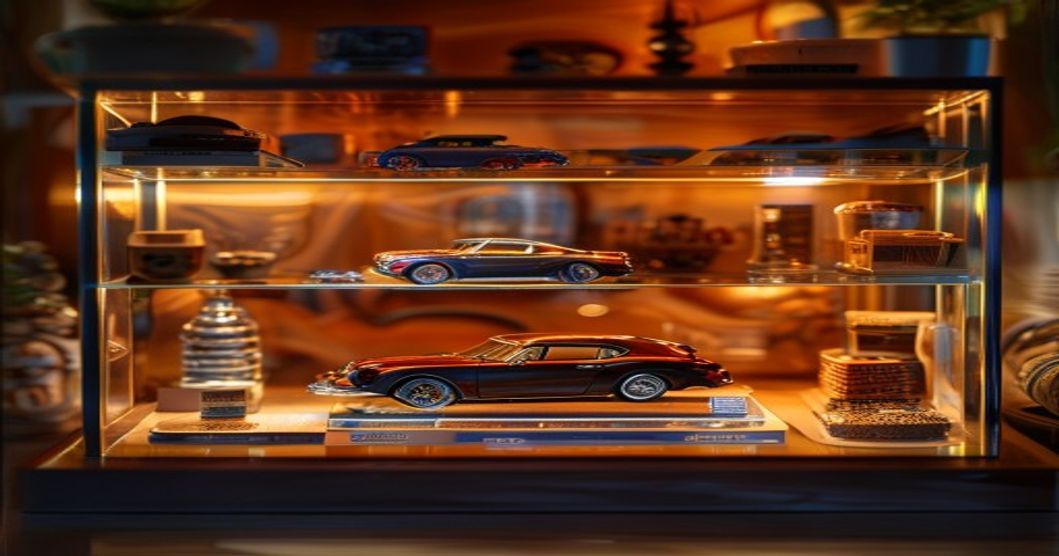
A diecast collection is more than a pile of model cars in a box — it is a display of personal taste, automotive enthusiasm, and curation skills. The way you display your collection transforms a hobby into art. But choosing the right display case, lighting, and layout can be overwhelming given the variety of options at every price point.
Diecast retailers sell models in the hundreds of dollars for premium pieces, and the wrong display can scratch paint, fade colors, or just look cluttered. This guide covers display solutions for collections of every size and budget, with specific recommendations for the most popular scales (1:64, 1:43, 1:24, and 1:18). ## Quick Verdict: Best Display Solutions by Collection Size
| Collection Size | Best Solution | Approximate Cost |
|---|---|---|
| Under 20 models | Floating wall shelves | $30-$80 |
| 20-50 models | IKEA Detolf glass cabinet | $60-$100 |
| 50-200 models | Custom wall unit with LED | $300-$800 |
| 200-500 models | Modular display cases | $500-$1,500 |
| 500+ models | Dedicated room with built-ins | $2,000-$10,000+ |
Bottom line: Most collectors should start with the IKEA Detolf glass cabinet — it is the best value in display cases for the price, accommodating 1:18 and 1:24 scales perfectly. Browse diecast retailers for display accessories and lighting upgrades.
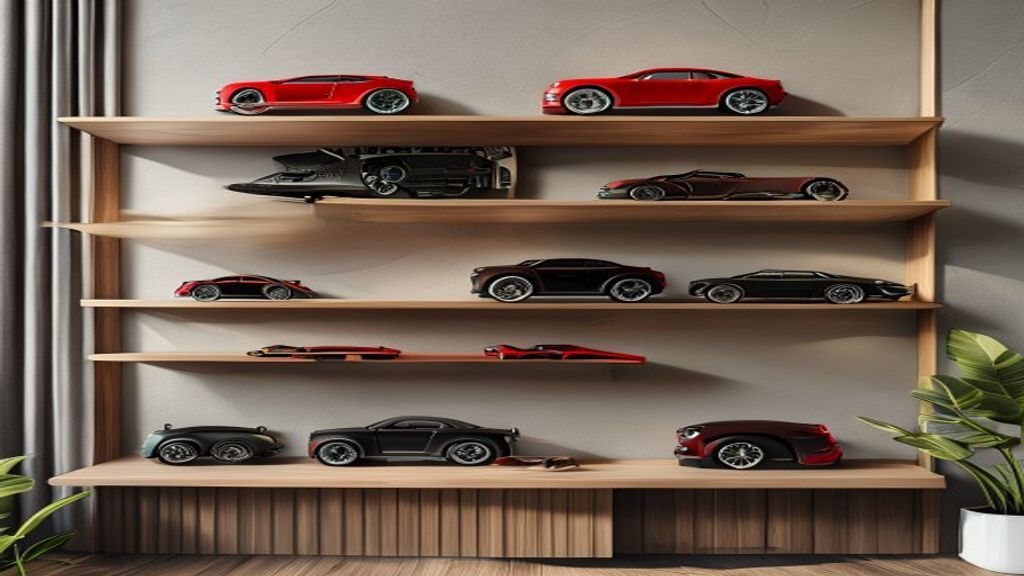
Display Requirements by Scale
Different scales have different space and display needs. Here is what works for each:
1:64 Scale
The smallest common scale, taking up minimal space. A 1:64 model is about 2.5-3 inches long.
- Best displays:
- Wall-mounted floating shelves with 4-6 inch depth
- Shadow box frames with fabric backing
- IKEA Detolf turned on its side
- Custom clear acrylic risers
- Tiered desktop display stands
Spacing: Allow 3-4 inches of horizontal space per model for visual breathing room. You can fit 30-50 1:64 models per Detolf shelf.
1:43 Scale
A medium scale at 4-5 inches long. Less common but provides good detail.
- Best displays:
- Wall-mounted glass display cabinets
- Standard 36-inch wide curio cabinets work perfectly
- Detolf fits 1:43 with room for two-tier displays
- Tiered acrylic stands for countertop display
Spacing: Allow 5-6 inches horizontal space per model. A standard curio cabinet fits 25-40 1:43 models. ### 1:24 Scale
A larger scale at 7-8 inches long. Less common but impressive when displayed properly.
- Best displays:
- Standard curio cabinets (36-48 inches wide)
- Wall-mounted glass shelves with 12-inch depth
- Detolf is too narrow for most 1:24 unless turned sideways
- Custom display cases with adjustable shelves
Spacing: Allow 8-10 inches horizontal space per model. A 48-inch cabinet fits 5-6 1:24 models per shelf.
1:18 Scale
The most popular collector scale at 9-11 inches long. Requires substantial display space.
- Best displays:
- IKEA Detolf (perfectly fits 1:18 scale)
- Standard curio cabinets (40-48 inches wide)
- Wall-mounted display cases
- Custom built-in shelves
Spacing: Allow 11-13 inches horizontal space per model. A single Detolf holds about 12-15 1:18 models per shelf.
Best Ready-Made Display Cases
IKEA Detolf — Best Value for 1:18 and 1:24
Price: $60 | Capacity: 4 glass shelves, each holds 12-15 1:18 models
The IKEA Detolf is the gold standard for diecast display cases. At $60 for a 43-inch tall glass cabinet, no other product matches its value.
- Why it works:
- Tempered glass shelves and door
- Adjustable shelves (4 included)
- Magnetic closure keeps door secure
- Fits perfectly against most walls
- Compatible with aftermarket LED strip lights
- Tips:
- Add LED strip lights under each shelf for dramatic effect
- Place felt or velvet fabric on shelves to prevent scratches
- Use the included shelf clips to keep models from sliding
- Stack two Detolfs side by side for a 6-foot display wall
- ### Wall-Mounted Floating Shelves — Best for 1:64 and 1:43
Price: $30-$80 for a set of 3-4 shelves | Capacity: 5-15 models per shelf
Floating wall shelves are the most versatile display solution. They work for any scale, fit any wall, and can be rearranged as your collection grows.
- Top picks:
- IKEA Lack floating shelves ($10 each)
- West Elm Mid-Century Floating Shelves ($40-$80 each)
- Amazon Basics Floating Shelves ($15-$25 each)
- Custom-cut glass shelves from local glass shops
- Tips:
- Space shelves 10-12 inches apart vertically for 1:18 models
- Use 6-8 inch spacing for 1:64
- Install with proper wall anchors (drywall alone is insufficient)
- Consider corner shelves to maximize wall space
Curio Cabinets — Best for Mixed Collections
Price: $200-$800 | Capacity: 40-100 mixed models
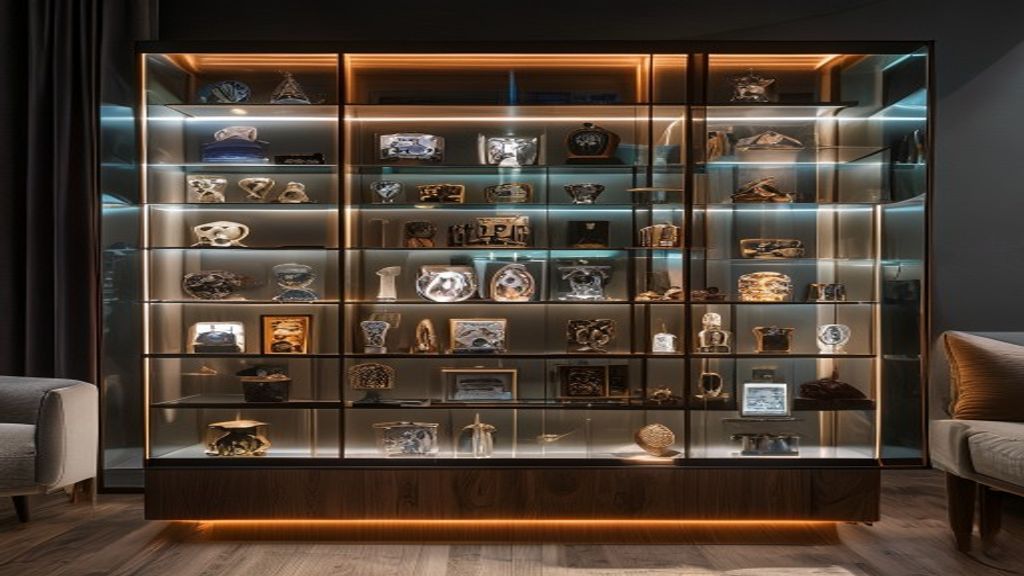
Traditional curio cabinets work well for established collectors with mixed scale collections. They typically include built-in lighting and adjustable glass shelves.
- Top picks:
- Howard Miller curio cabinets ($400-$1,500)
- Pulaski curio cabinets ($300-$800)
- Ashley Furniture curio cabinets ($200-$600)
- IKEA Malsjo (small and affordable, $80)
- Tips:
- Look for cabinets with built-in halogen or LED lighting
- Adjustable shelves accommodate models of different heights
- Glass on all sides allows viewing from multiple angles
- Locking doors protect valuable pieces
Acrylic Display Cases — Best for Single Hero Pieces
Price: $20-$100 per case | Capacity: 1-5 hero models
Acrylic cases are perfect for protecting single valuable pieces or featured models. They are dust-proof, scratch-resistant, and showcase the model beautifully.
- Top picks:
- Better Display Cases stackable acrylic ($20-$50)
- DisplayGifts acrylic cases ($15-$40)
- Custom-cut acrylic from local plastics shops
- IKEA Sektion glass doors with custom backing
- ## Lighting: The Secret to Great Display
Lighting makes the difference between a collection and a showcase. The right lighting enhances paint details, brings out color depth, and creates a museum-quality presentation.
Best Lighting Options
- LED Strip Lights ($15-$30 per shelf)
- Self-adhesive, easy to install
- Available in warm white, cool white, and RGB color-changing
- USB-powered or plug-in
- Dimmable options available
- Recommended: HitLights or Minger LED strips
- Battery-Operated Puck Lights ($10-$20 for 3-pack)
- No wiring needed
- Touch or remote control
- Perfect for rental properties
- Replace batteries every 6-12 months
- Hardwired Display Lighting ($50-$200)
- Most professional look
- Requires electrical work
- Best for permanent installations
- Consider hiring an electrician
Lighting Color Temperature
Warm white (2700K-3000K): Best for vintage cars, classic models, and creating a cozy atmosphere. Highlights metallic paint well.
Cool white (4000K-5000K): Best for modern cars, JDM models, and contemporary collections. Crisp and clean.
Daylight (5000K-6500K): Most accurate color rendering but can feel clinical. Best for art-focused collections.
RGB color-changing: Fun and customizable but can look gimmicky. Best for casual displays, not serious collections.
Lighting Tips
- Always use LED lights — they generate minimal heat that could damage models
- Install lights on top of each shelf pointing down, not behind
- Avoid fluorescent lighting (uneven, can yellow over time)
- Consider smart bulbs for adjustable lighting throughout the day
- Add a single spotlight for hero pieces to draw the eye
- ## Display Layouts That Look Professional
Linear by Theme
Group models by theme rather than by brand. A wall of muscle cars looks better than a wall of mixed Hot Wheels and Maisto models.
- Layout example for a 6-foot Detolf wall:
- Top shelf: American muscle cars (1960s-1970s)
- Middle shelf: Modern supercars
- Bottom shelf: JDM tuner cars
- Top of case: Display boxes and accessories
Color Gradient
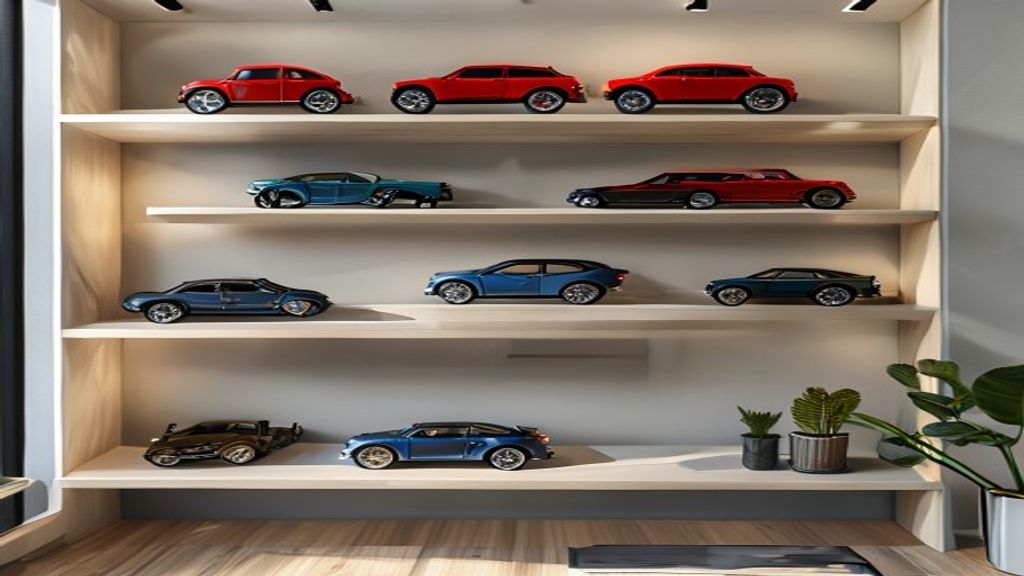
Arrange models by color to create visual flow. Start with reds on one side, transition through oranges, yellows, greens, blues, and end with blacks and whites.
Why it works: The eye follows the color spectrum naturally, creating visual interest. The arrangement looks intentional and art-gallery-like.
Chronological Order
For brand-focused collections (e.g., all Ford Mustangs), arrange by year. This creates a timeline of the model evolution.
Hero Piece Layout
Put your most valuable or favorite model in the center of the display. Surround it with supporting pieces. The eye is naturally drawn to the center, so this gives the hero piece proper emphasis.
Layered Display
Use risers or stepped platforms to create depth. Front row models are at eye level, back row models elevated by 2-3 inches. This is especially effective for 1:64 collections in shallow cases.
Common Display Mistakes to Avoid
Direct sunlight. UV light fades paint and degrades plastic. Never display diecast in direct sunlight or near windows with strong sun.
No backing material. Bare wood or glass shelves can scratch models. Always add felt, velvet, or microfiber backing.
Cramming too many models. Less is more. Better to display 30 models beautifully than 100 models cluttered.
Mixing scales randomly. Display 1:18 with 1:64 looks odd. Keep scales separate or use clear visual separation.
Using incandescent lighting. Heat damage over time. Always use LEDs.
Ignoring dust. Even with cases, dust accumulates. Clean models every 3-6 months with microfiber cloth and canned air. ## DIY Custom Display Solutions
For collectors who want something unique, custom DIY displays offer unlimited flexibility.
Built-In Wall Units
The most impressive display is a custom built-in wall unit. This requires carpentry skills or hiring a contractor but creates a museum-quality display.
Estimated cost: $2,000-$10,000 depending on size and finish Best for: Collections of 200+ models with dedicated display space
- Considerations:
- Plan for future growth — make shelves adjustable
- Include electrical wiring for integrated lighting
- Use tempered glass for safety
- Add backlighting for dramatic effect
Pegboard Displays
Pegboard with custom-cut mounting hardware allows for 3D display. Models can be mounted at different angles, creating a dynamic visual effect.
Estimated cost: $50-$150 for materials Best for: Displaying 20-50 hero pieces at dynamic angles
Acrylic Riser Shelves
Custom-cut acrylic risers create multi-level displays on any flat surface. Combine with LED backlighting for a futuristic look.
Estimated cost: $30-$100 Best for: Tabletop displays of 10-30 models
Themed Vignettes
Create miniature scenes with models placed in diorama settings. Roads, landscapes, buildings, and figures turn a display into a story.
Estimated cost: $50-$500 depending on materials Best for: 1:43 and 1:18 models with creative collectors
Caring for Your Display
Once your display is set up, ongoing maintenance keeps models looking their best:
Weekly: Quick visual inspection for any models out of place or visible damage.
Monthly: Dust exterior of cases with microfiber cloth. Check that lighting is working properly.
Quarterly: Remove models and clean them individually. Wipe shelves with slightly damp cloth. Replace any worn felt or velvet.
Annually: Deep clean entire display. Consider rotating which models are on display. Check lighting for burnt-out LEDs.
Climate considerations: Avoid displays in humid areas (basements, bathrooms) or temperature-fluctuating rooms (attics, garages). The ideal environment is 50-70% humidity and 65-75°F. ## Final Verdict: Start Simple, Scale Up
For most new collectors, the IKEA Detolf at $60 is the right starting point. It accommodates most 1:18 and 1:24 collections, looks clean and professional, and can be expanded with additional Detolfs as your collection grows.
For 1:64 and 1:43 collectors, floating wall shelves or a small curio cabinet work well. The most important thing is to get your collection out of storage boxes and into visible display — even a simple wall shelf dramatically increases your enjoyment of the hobby.
Add LED lighting for the most dramatic effect. The difference between a collection with and without proper lighting is the difference between a hobby and a showcase. Browse diecast retailers for display accessories, risers, and lighting kits to upgrade your setup.
Frequently Asked Questions
What is the best display case for diecast models?
The IKEA Detolf is the most popular choice for 1:18 and 1:24 scales due to its value. For smaller collections, floating wall shelves or a small curio cabinet work well.
How do I prevent dust on diecast models?
Use a closed display case with glass or acrylic doors. Clean models every 3-6 months with microfiber cloth and canned air.
Can I display diecast in direct sunlight?
No. Direct sunlight fades paint and degrades plastic over time. Display in a room with indirect natural light or use UV-filtering film on windows.
What color lighting is best for diecast?
Warm white (2700K-3000K) for classic and vintage cars. Cool white (4000K-5000K) for modern and JDM models. Avoid fluorescent lighting.
How much space do I need for 100 diecast models?
For 1:64 scale, about 3-4 square feet of shelf space. For 1:18 scale, about 12-15 square feet. Plan for future growth when designing your display.
Should I display models in original packaging?
For most entry-level models, displaying them out of the package looks better. For rare or valuable limited editions, keeping them packaged protects their value. Where can I buy display cases specifically for diecast?
Diecast specialty retailers carry display cases designed specifically for model cars. Amazon, Wayfair, and IKEA also have generic glass cabinets that work well.
Can I display diecast in a bathroom or kitchen?
Avoid humid environments. Bathrooms and kitchens have humidity fluctuations that can damage models over time. Living rooms, bedrooms, and home offices are better choices.
What is the best material for shelves?
Glass or wood with felt/velvet covering. Glass looks elegant and is easy to clean. Wood with fabric backing is more forgiving for imperfect model placement. Avoid bare wood or metal — they can scratch models.
Should I rotate my displayed models?
Yes. Rotating your display every 3-6 months lets you enjoy models that would otherwise sit in storage. It also prevents uneven light exposure on always-displayed pieces.
Showcase Your Collection With Pride
The right display transforms a diecast collection from boxes in a closet to a centerpiece of your home. The investment in a quality display case pays back every day as you enjoy your collection. Start simple with a single Detolf or floating shelf, add lighting, and expand as your collection grows.
Your collection tells a story about who you are. Make sure the display does the story justice.
Leave a Reply